
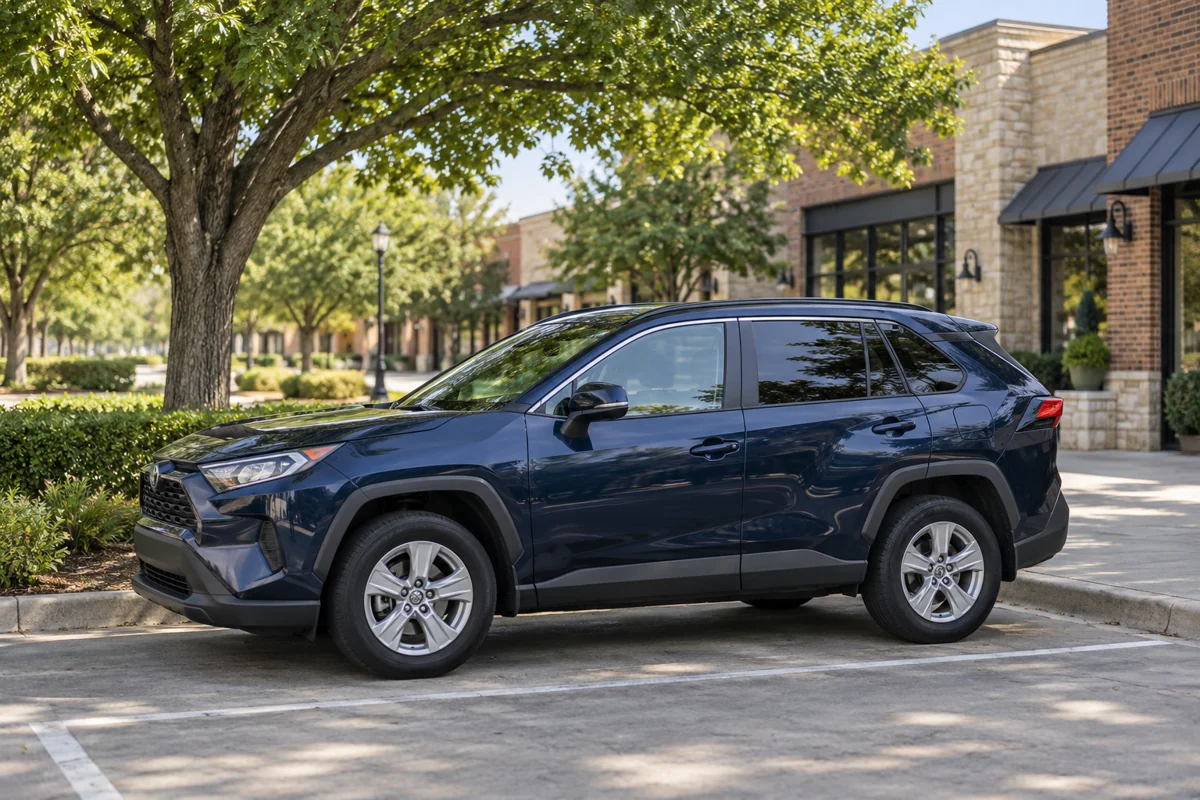
Know where the spare really is
Saying there is a spare is only the beginning. Consider who can get it, whether that person is available and whether they are authorized to bring it to the vehicle. A spare at home behind the only key you are carrying may be harder to retrieve than you expect.
Agree on a sensible arrangement with the people who use the car. Avoid leaving key-location details attached to the keyring itself. If you want to enquire about an additional key before the outing, ask about vehicle and key compatibility while your current working key is still available.
Record the car and parking place
Keep the make, model and year somewhere you can access without opening the car. Note the kind of key or fob you use. That information helps distinguish an enquiry about a key left inside from one about replacing the only usable key; the vehicle's appearance alone does not answer those questions.
When you park, notice the actual entrance, street, row or other useful marker. A Town Square reference may still leave several possible parking spots. At Bear Creek Nature Park, identify the lawful parked location; do not assume that a vehicle can be reached from a trail or through a restricted entrance.
If the plan changes, describe it
If a key is visible in the locked car, say that. If you cannot find it, explain whether another working copy exists. If it is in your hand but does not operate the vehicle, describe what happened during the last normal attempt. Avoid turning a symptom into a definite diagnosis.
The car locksmith page brings those different situations together. Ask what authorization information is needed, which work is suitable for the vehicle and what availability can be confirmed. Keep your phone accessible so that the meeting point and person with the car can be clarified.
Leave room for a clear agreement
Before approving a service, ask how its scope and charge will be explained. A key replacement, an access request and an unreliable existing fob need their own discussion. If circumstances change, such as a spare becoming available, pass that information on before additional work is agreed.
For a Lancaster enquiry, call 469-455-2195 with the details in the contact checklist. If someone is in immediate danger, contact emergency services first. A key plan is useful preparation for an ordinary inconvenience; urgent safety concerns need the appropriate emergency response.