
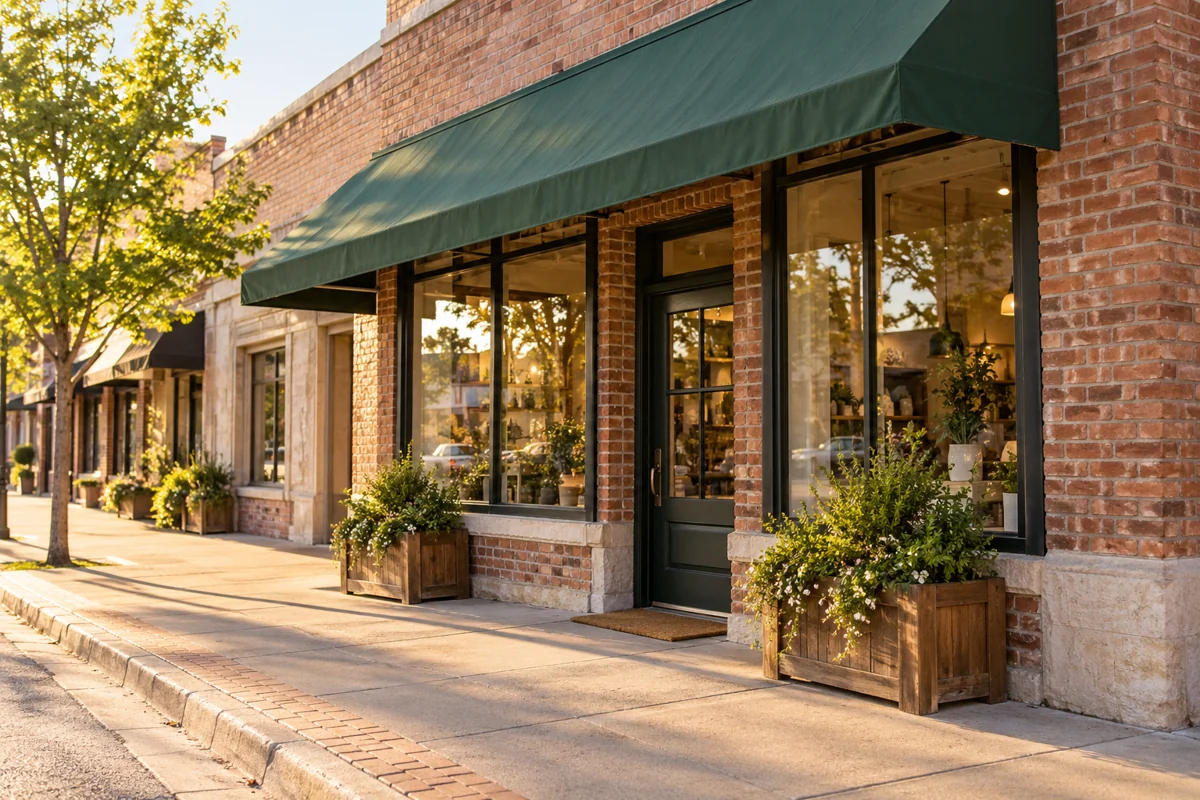
What has changed at the entrance?
A former keyholder, an unreturned copy and a lock that will not turn are separate reasons to call. If the concern is control of keys, count the entrances affected and identify which copies are accounted for. Rekeying compatible locks may be a question to raise, while the suitability of the hardware still needs checking.
For a physical fault, explain the behavior during ordinary use: a key catches, a latch will not engage, or the door needs pressure before it closes. Mention whether the problem happens every time or only occasionally. That information is more useful than choosing a replacement product before anyone has assessed the entrance.
A shop name needs a doorway
A shop around the Town Square may be easy to recognize, but its customer entrance and staff door can be different meeting points. Supply the address, business name and suite if there is one. Explain which pedestrian door needs attention and where the person approving the work can be reached.
If the business occupies a leased unit, find out whether that lock is the tenant's responsibility or belongs to the building's shared entrance. A staff member holding a key is not automatically the person who can approve changes. Resolve any landlord or property-manager involvement before the proposed scope is agreed.
Define a sensible scope
For an ordinary pedestrian door, describe the actual hardware and how the entrance is used. Explain if it opens into a shared lobby or directly to the business unit. Ask whether the particular request can be handled, and keep an authorized contact available to settle questions about the door and proposed work.
Before giving approval, discuss what the proposed charge covers and how another fault would be explained if one is found. For an intermittent issue, the guide to describing an unreliable lock can help a colleague leave useful notes for the person making the call.